Facts checked October 28, 2026 · Sources linked inline and listed below
In Nashville, bathroom permits come from the Metropolitan Government's Department of Codes and Building Safety, usually just called Metro Codes. Before anyone files, confirm with Metro Codes that your address falls under its jurisdiction. Metro's published rules are specific. Retiling a wall or setting a new vanity with no plumbing or wiring changes is on the no-permit list. A new shower, a moved toilet or a new exhaust fan is not. Who signs for the plumbing and electrical work is regulated too, and that affects how you should compare bids.
This guide pulls the Metro rules, the state licensing thresholds and the relevant federal guidance into one place, with a link to the source behind each one. It is general information, not legal or code advice. For a specific house, the Metro Codes permit staff and your contractor have the final word.
Which bathroom jobs need a Metro Codes permit?
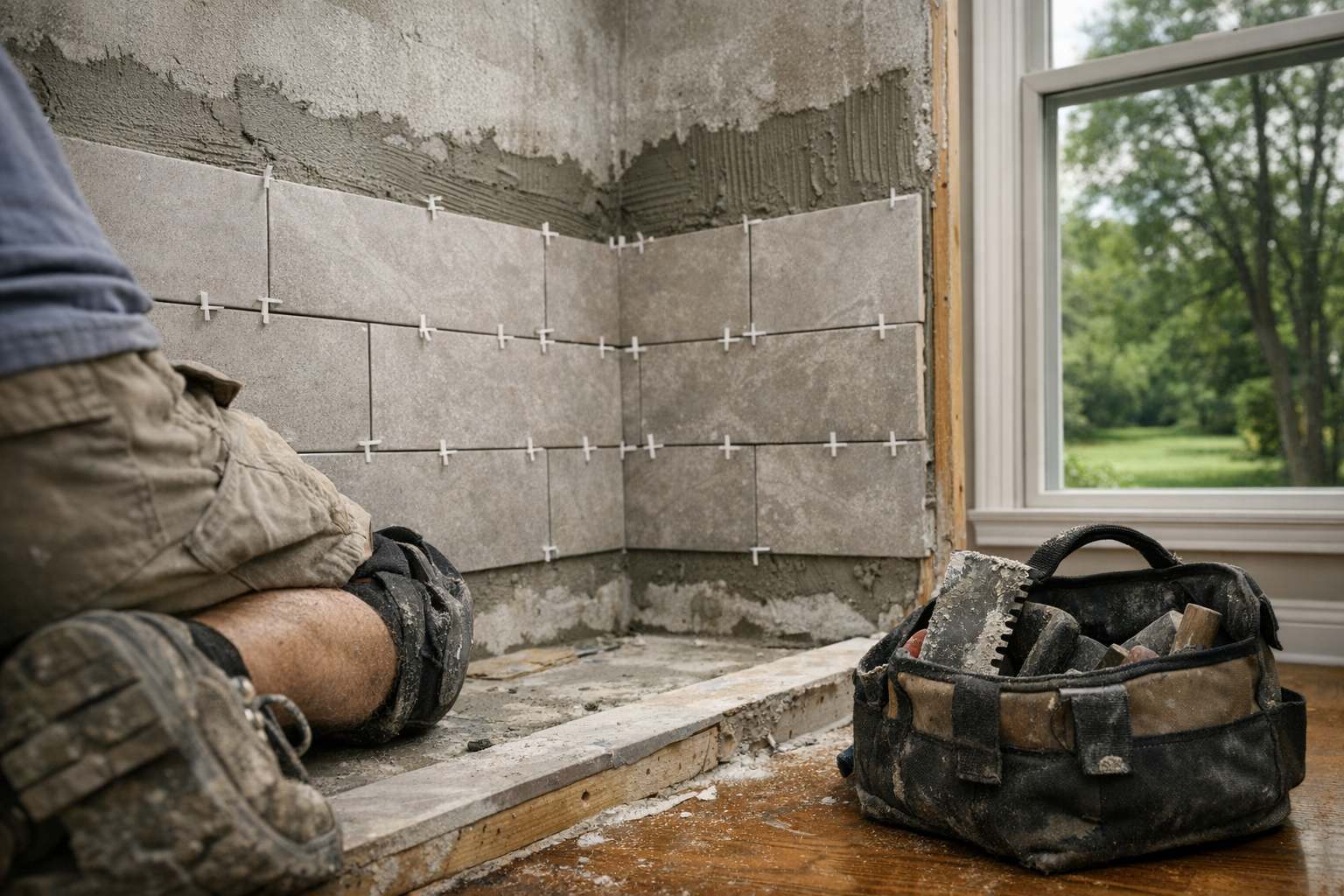
Metro's page on renovating a single-family residence says interior renovations require a permit from the Department of Codes and Building Safety. It then lists the jobs that don't need one in one- and two-family homes. Several of them are typical bathroom refresh work: ceramic and non-ceramic wall tile, floor laying and refinishing, interior painting and wallpaper, vanities installed without electrical or plumbing work, and cabinets installed without either.
The same table marks the jobs that do need a permit. A new shower or bath enclosure needs a building permit. So does removing a wall, even one that isn't load-bearing, and replacing more than 100 square feet of drywall. Relocating a plumbing fixture or adding a new one is marked for a plumbing permit. An exhaust fan is marked for a gas/mechanical permit. Replacing a tub, toilet or sink in the same spot isn't listed either way, so ask the Zoning Help Desk before assuming it's exempt.
Homeowners submit a residential permit application to the Zoning Help Desk, along with a floor plan if the layout is changing. A zoning examiner reviews it and hands back a checklist of other Metro approvals to collect. The page warns that trying to work out those approvals on your own leads to delays. Metro's permitting process guide says fees are paid once the application is approved. Trade permits for electrical, plumbing, gas or HVAC work are applied for after the building permit is issued, and inspections are requested and tracked in Metro's E-permits system. Neither page publishes a fee amount, so we don't quote one here.
Metro Codes is in the Metro Office Building at 800 President Ronald Reagan Way, 1st floor, and the main line is 615-862-6500. The Zoning Help Desk is at 615-862-6510. For code, Metro has adopted the 2024 International Residential Code and 2024 International Plumbing Code, with local amendments, along with the 2023 National Electrical Code. Metro's announcement says the 2024 codes apply to plans and applications submitted after July 16, 2025.
Plumbing, electrical and fan work: who can pull the trade permits
Metro's renovation page lets an owner who lives in, or plans to live in, a single-family home obtain a building permit to renovate it. It limits that self-permit to work under $25,000 when the house is owned by an LLC or trust, or is a rental or investment property. The same page says the building permit is what lets registered contractors pull the trade permits.
Metro's registration forms show what "registered" means. To become a Registered Metropolitan Plumbing Contractor, the applicant must hold a Master Plumber's license and carry a $40,000 Metropolitan permit bond, at least $300,000 in general liability insurance and a Davidson County business license. The person who holds that license must sign any plumbing permit. The electrical registration form works the same way for master electricians.
In practice, a bathroom that moves the toilet, adds a shower, adds a circuit or installs a new fan will usually involve at least one trade permit, signed by a registered tradesperson. If a general remodeler quotes the whole job, ask who their plumber and electrician are, and whose name will be on each permit.
Ready to compare window quotes in Nashville? It's free and there's no obligation.
Get Free QuotesHistoric overlays and floodplain lots
A historic address mostly doesn't affect an interior bathroom remodel. The Metro Historic Zoning Commission's handbook says that, outside the Historic Landmark Interior overlay, interior repairs and alterations don't need a preservation permit. It describes that interior overlay as best suited to public spaces in civic buildings. Exterior changes are another matter. In historic preservation and historic landmark overlays, exterior repairs and alterations do need review, and the handbook lists putting HVAC and mechanical equipment in the wrong spot as a common permit mistake. If a new fan or vent terminates on a street-facing wall or roof in one of those districts, call the commission at 615-862-7970 before work starts.
Flood zones matter more than many owners expect. Metro's renovation page says a property in a floodplain overlay should contact Metro Stormwater. Metro Water Services' Build Responsibly page says every development in a Special Flood Hazard Area needs local permits, including improvements to existing buildings. It also says new homes built in the floodplain must have the lowest finished floor four feet above the 1-percent-annual-chance flood elevation. That rule is written for new homes. Whether it affects a remodel of an existing home isn't spelled out on that page, so a basement or ground-floor bathroom on a floodplain lot is worth a call to Metro Water's Development Services Division at 615-862-7225.
Moisture, ventilation and Nashville's flood history
Water is the reason the floodplain question isn't academic. During the May 2010 flood, Nashville International Airport recorded 13.57 inches of rain over May 1 and 2. That more than doubled the previous two-day record of 6.68 inches, and the Cumberland River crested at 52.55 feet in Nashville on May 3. Less than eleven years later, the National Weather Service measured 7.01 inches at the airport on March 27–28, 2021. It issued a rare Flash Flood Emergency for the southern and eastern metro, and hundreds of homes and businesses flooded. Four of the six deaths in Middle Tennessee from that storm were in Davidson County.
The everyday moisture problem in a bathroom is quieter: shower steam with nowhere to go. The EPA's mold guidance says excess moisture can cause mold to grow in bathrooms and advises running the exhaust fan or opening a window while showering. Elsewhere in the same guide, it suggests keeping indoor humidity below 60%, ideally between 30% and 50%, and drying anything wet within 24 to 48 hours.
For fan sizing, the Department of Energy's Building America guide from Pacific Northwest National Laboratory summarizes the 2021 International Residential Code: at least 50 cfm for a bathroom fan that runs intermittently, or 20 cfm if it runs continuously. The guide says the fan should be ducted outdoors, not into the attic or crawlspace. Metro now enforces the 2024 edition with local amendments, so ask your contractor and inspector which figure applies. And remember that a new fan is on Metro's list for a mechanical permit.
- Ask where the fan duct will end: outdoors, not in the attic or crawlspace.
- Ask for the fan's rated airflow in cfm, and whether it will run on demand or continuously.
- If the bathroom is on a basement or ground floor, check whether the lot is in a floodplain overlay before choosing materials.
Toilets, water use and rebates
If the remodel includes a new toilet, the EPA's WaterSense label is the easiest way to compare. WaterSense toilets use no more than 1.28 gallons per flush, about 20% less than the federal standard of 1.6 gallons. They are also independently certified for flushing performance, not just water use. EPA estimates that replacing older toilets with WaterSense models can cut toilet water use by 20 to 60 percent. That's a national estimate, and what you save in Nashville depends on your household and your water bill.
The same EPA page notes that some utilities offer rebates or vouchers for WaterSense toilets. We did not find a current toilet or fixture rebate from Metro Water Services. If a contractor says a local rebate applies, ask which program it is and look at the program's own page before you count on the money.
Hiring in Davidson County: licensing, contracts and lead-safe work
Tennessee's Board for Licensing Contractors says a home improvement license is required for remodeling jobs over $3,000 and under $25,000, counting materials and labor, in the counties that have adopted the law. Davidson County is on the board's list of those counties. At $25,000 and up, a contractor's license is required. The home improvement license doesn't cover plumbing, electrical or HVAC work, which fall under their own licensing. The board also says a license is required even when no permit is.
A 2025 consumer release from the Tennessee Department of Commerce and Insurance and the Attorney General adds practical rules. For jobs of $25,000 or more, the contractor needs a license before bidding or negotiating a price. You can check license status for free at Verify.tn.gov. The release says the contractor, not the homeowner, should pull permits, and that pressure to pull your own permit is a red flag. It also says state law prohibits requiring more than one-third of the price as a down payment, and it advises against paying cash or paying in full before the work is finished.
Older houses add one more check. For homes built before 1978, the EPA recommends hiring a lead-safe certified contractor, because older paint is more likely to contain lead and sanding or cutting it creates hazardous dust. Tennessee's environment department says the federal RRP rule has required contractors who disturb paint in pre-1978 homes to be certified since April 2010. It also says the state's lead-based paint rule requires pre-renovation education, using EPA's "Renovate Right" brochure. Tearing out tile, plaster, trim or painted drywall in an older bathroom can disturb paint, so if your house predates 1978, ask about lead-safe practices before demolition starts.
Bathroom remodelers serving Nashville
These businesses appear in public Google Maps listings for bathroom remodeling in Nashville (checked October 28, 2026). HomeLynk is not affiliated with them and does not rank, rate or endorse them. When you request quotes through HomeLynk, you are matched with contractors from our own network, which may or may not include these companies. Before signing, check any contractor's Tennessee home improvement or contractor's license with the Board for Licensing Contractors at Verify.tn.gov.
Zintex Remodeling Group
Fesslers Pkwy, south of downtown
Bathroom remodeling and general remodeling
Southern Showers
Kermit Dr, southeast Nashville
Bathroom remodeling
Hantel Kitchens & Baths
Berry Hill
Bathroom and kitchen remodeling
Hermitage Kitchen Gallery
Merritt Ave, south of downtown
Bathroom and kitchen remodeling
The Kingston Group
Alabama Ave, west Nashville
Bathroom remodeling, home building and general contracting
CrewPros Nashville Home Services and Remodeling
Indiana Ave, west Nashville
Bathroom and kitchen remodeling
Bridger Design + Build
Union St, downtown
Bathroom, kitchen and deck remodeling
Questions to ask before you sign
- Which parts of this job need a Metro Codes building permit, and which need plumbing, electrical or mechanical trade permits?
- Who will pull each permit, and whose license number will be on the plumbing and electrical permits?
- What is your Tennessee home improvement or contractor's license number, so I can check it on Verify.tn.gov?
- Is my lot in a floodplain or historic overlay, and have you checked with Metro Stormwater or the Historic Zoning Commission if it is?
- Where will the exhaust fan duct end, and what is the fan's rated airflow in cfm?
- If the house was built before 1978, who on your crew is lead-safe certified?
- How much is the deposit, and how do the remaining payments line up with finished work?
- What does the warranty cover for labor versus the products, and for how long?
Related guides
Sources
- Metro Nashville Codes — Renovate a Single-Family Residence
- Metro Nashville Codes — Permitting Process guide (PDF)
- Metro Nashville Codes — Adopted Codes List
- Metro Nashville Codes — Metro Adopts 2024 International Building Codes
- Metro Nashville Codes — Plumbing contractor registration form
- Metro Nashville Codes — Electrical contractor registration form
- Metro Historic Zoning Commission — Historic Zoning Handbook
- Metro Water Services — Build Responsibly (floodplain development)
- NWS Nashville — May 2010 Flood
- NWS Nashville — March 27–28, 2021 Flash Flooding
- PNNL Building America Solution Center — Bathroom Exhaust Fans
- EPA — Mold house tour (text version)
- EPA WaterSense — Toilets
- Tennessee Board for Licensing Contractors — Home Improvement Licensing Requirements
- Tennessee Board for Licensing Contractors — Counties Adopting the Home Improvement Law
- Tennessee Dept. of Commerce & Insurance and Attorney General — Home improvement fraud tips (2025)
- EPA — RRP Program: Consumers
- Tennessee Dept. of Environment and Conservation — Lead Renovation, Repair and Painting